

Dental Implants
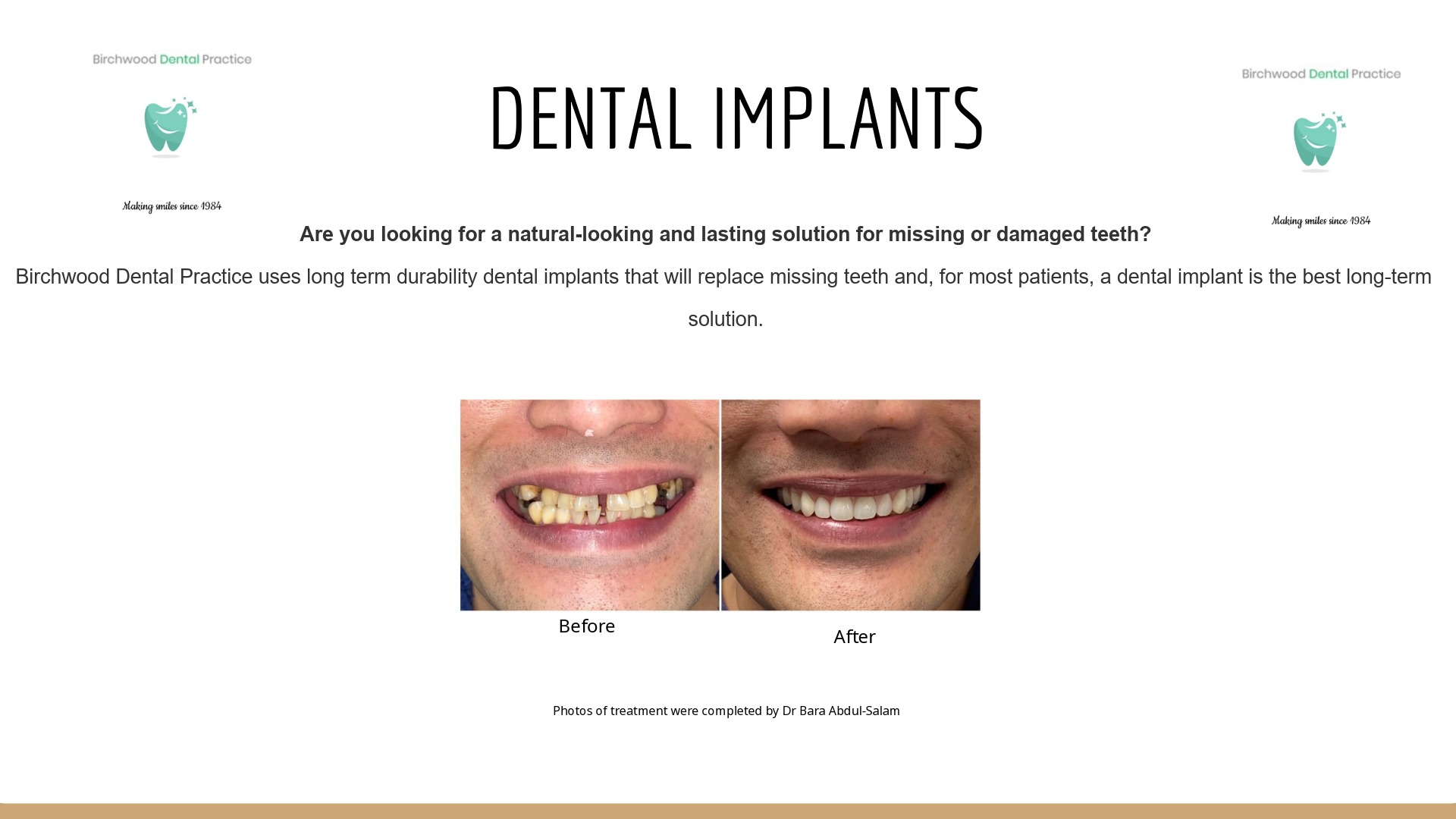
Are you looking for a natural-looking and lasting solution for missing or damaged teeth?
Birchwood Dental Practice uses long term duribility dental implant that will replace missing teeth and, for most patients, a dental implant is the best long-term solution.
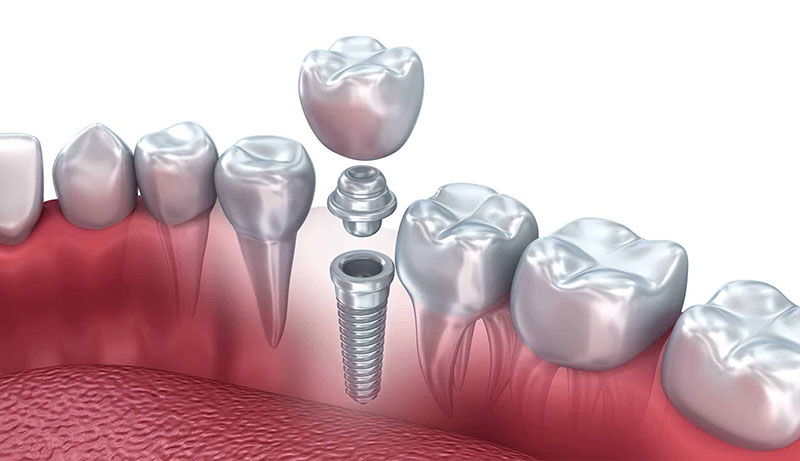
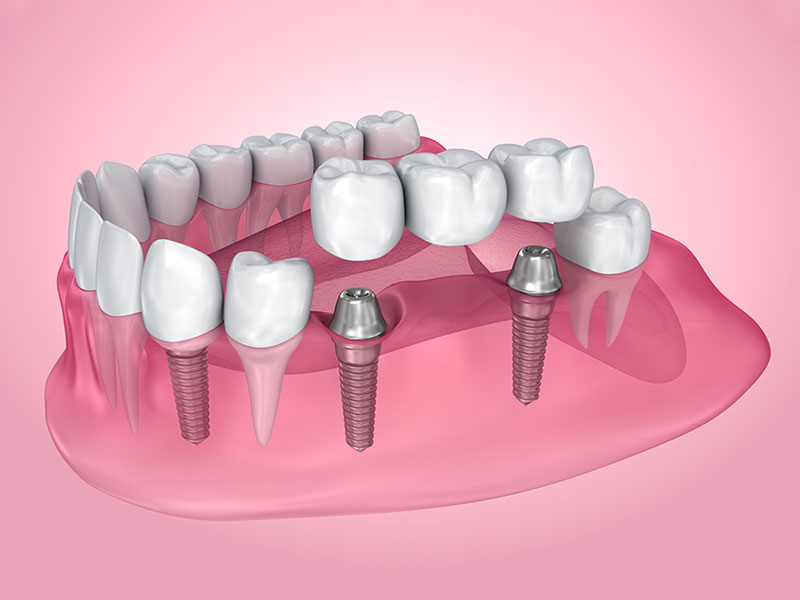
How do Dental Implants work?
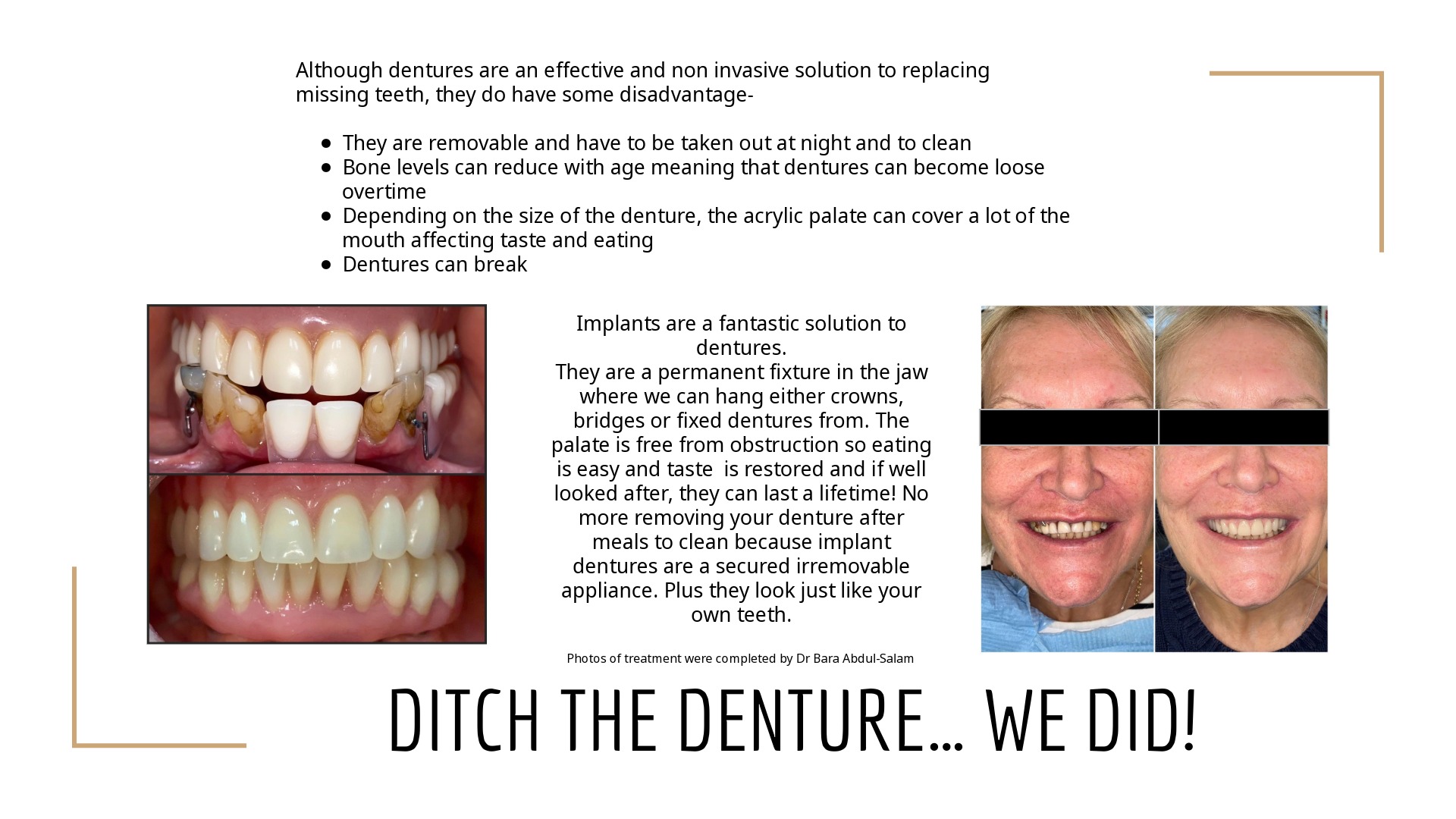
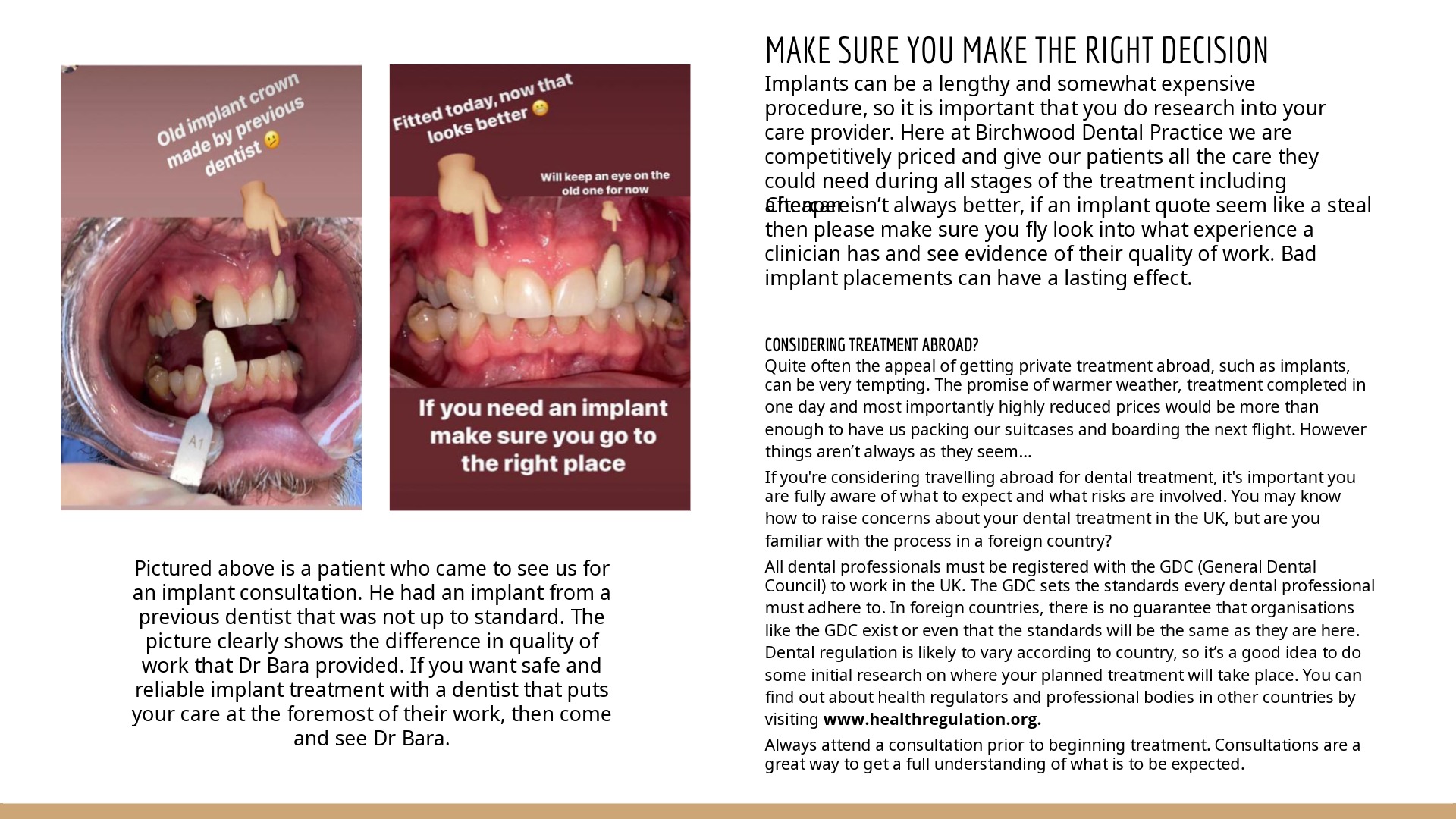
A dental implant replaces the root of your missing tooth providing a secure post onto which we can secure a false tooth. A crown, bridge or even a removable denture can be attached to the implants. Dental Implants don’t just look great, they also restore function of your missing teeth, helping you to enjoy the foods you love.
Dental Implants are long–lasting and, in some cases, last for life! Even though your implant is not susceptible to decay, plaque can still build up around it, leading to gum infection and potentially causing your implant to loosen.
What does dental implant treatment involve?
Dental implant treatment is usually carried out over a few appointments. We will explain everything and give you time to ask questions. First of all we will examine your mouth and make sure you are a good candidate for dental implants.
At your next appointment we’ll create a socket in your jawbone, so we can insert the implant. We will use a local anaesthetic, which will numb the area, so you don’t feel anything.
Once your implant has been inserted we’ll give it time – usually a few months – to integrate with your bone, proving a secure anchor for your new tooth. In the meantime we can fit a bridge or a denture to fill the gap.
Want to know more?
Are you wanting to learn more about Birchwood and Dental Implants? Please check out our slides or contact us for further information.



Questions
What Is The Advantage Of Dental Implants?
The biggest advantage of dental implants is that they don’t impact on your healthy teeth, they provide a permanent, long-lasting, fixed solution that is highly aesthetic. Different types of dental works can be fixed to implants in case there are several teeth missing or if the patient has no teeth. A single implant with a crown lasts longer than a bridge especially if a high-quality material like full-ceramic or Zirconia is being used and two healthy teeth won’t need to be impacted to put the bridge on. Dental implants are fully biocompatible and hypoallergenic, so no allergic reactions are expected even in case of a metal allergy.
How Long Do Dental Implants Last?
In case the osseointegration (integration with the bone) is completed successfully and the implant and bone are unified, implants normally last a lifetime. This integration takes place in the first three to six months so if the implant remains in the bone during that time it usually remains there for life. There can be illnesses or anatomic changes later causing an implant loosening or a wrongly executed dental work can also lead to the loss of an implant. It is very important to ensure extremely good oral hygiene after a dental implant treatment and to see a dentist at least once a year for a check-up so that potential bacteria attacks on the implant work can be prevented or treated in a timely manner. Most of the time losing an implant is not due to implant fault but due to the circumstances. Nevertheless, one should always use the latest up to date implant type that is recommended by top manufacturers and clinicians. At Birchwood Dental we only use the highest quality implants.
How Long Does The Healing Procedure Last Until The Final Work Can Be Done?
Normally the healing process takes 3-4 months, in some cases we will add bone grafting which will take 6- 9 months before the dental implants can be put in the jaw. If there is insufficient bone we will have to carry out a bone graft or sinus lift which will delay the process of 6-9 months.
Does The Insertion Of Dental Implants Hurt?
As the surgical intervention is done with a local anaesthetic the patient doesn’t feel any pain. Afterwards, there may be some discomfort and sensitivity could be felt that’s why we always prescribe painkillers.
How Are Nervous Patients Implanted?
In general, all patients are treated under local anaesthetic so no pain should be felt during the treatment. Of course, there are anxious patients who we will arrange sedation.